Island guide · the Saronic Gulf
Hydra Travel Guide: Is Hydra Right for You?
Hydra is a car-free stone town two hours from Athens, ideal for short breaks, art lovers and couples. Honest guide to who Hydra suits and who should skip.
Hydra at a glance
Go if: Couples · Weekenders from Athens · Art and architecture lovers · Anyone who hates traffic
Skip it if: Beach-first travelers · Families with buggies · People who want to explore by car · Partygoers
Getting there: No airport; hydrofoils and catamarans run from Piraeus in about 1 hour 30 minutes to 2 hours, or drive to Metochi on the Peloponnese coast for a 15-minute water taxi.
Hydra is right for you if you want a beautiful, car-free harbor town within two hours of Athens, where the pleasures are walking, swimming off rocks, long lunches and evenings on the waterfront. It is not right for you if you need sandy beaches, a rental car, nightlife or a full week of varied things to do; two or three nights is the sweet spot.
Hydra at a glance
- Island group: Saronic Gulf (Argo-Saronic), off the eastern Peloponnese
- Getting there: No airport. Hydrofoils and catamarans from Piraeus in about 1 hour 30 minutes to 2 hours (Hellenic Seaways Flying Cat and Alpha Lines), several times daily year-round. Alternatively drive to Metochi on the Peloponnese coast and take a 15-minute water taxi.
- Best for: Couples, weekenders from Athens, art and architecture lovers, anyone who hates traffic
- Not for: Beach-first travelers, families with buggies, people who want to explore by car, partygoers
- Best months: May, June, September, early October
- Price level: High
- Size & getting around: Small (about 50 sq km) with almost everything in one town. No cars, no scooters, no bicycles. You walk, take water taxis, or ride a mule for luggage.
Who Hydra is for
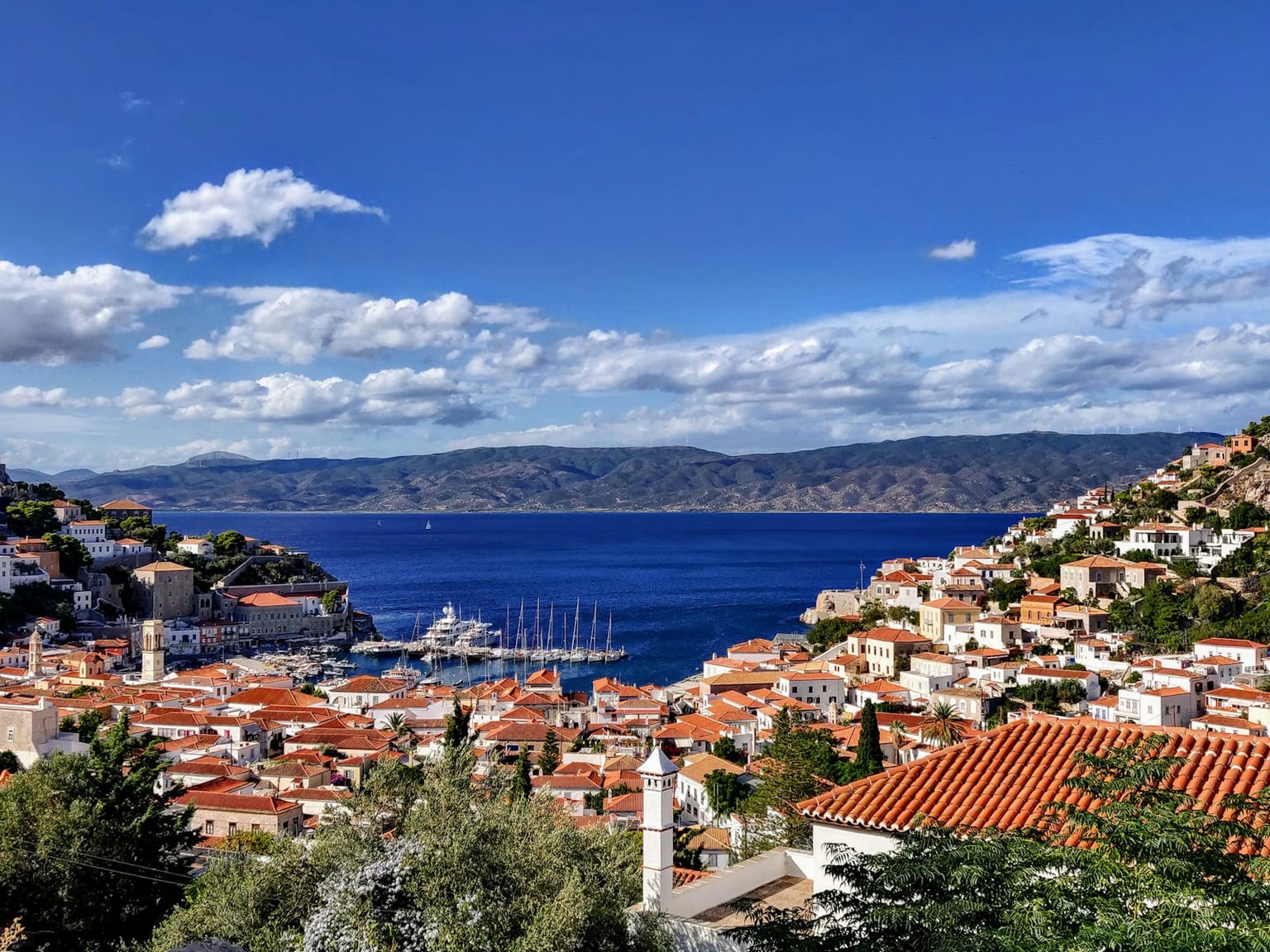
Hydra is for people who value atmosphere over amenities. The harbor town is a horseshoe of eighteenth-century stone mansions built by shipping captains, rising in tiers above the water, and a law banning wheeled vehicles has kept it looking much as it did when Leonard Cohen bought a house here in 1960.
It suits couples and solo travelers who like to walk, sit, look and swim. Add a few days to an Athens trip and Hydra makes a near-perfect contrast: no traffic, no plans, a coffee at the port and a swim off the rocks.
Who should skip Hydra
Skip Hydra if beaches are the point of the trip. There is no real sand; the swimming spots are rocky platforms, pebble coves and a couple of small beaches reached by water taxi. Families with small children and pushchairs will find the steep steps and lack of vehicles hard work, and anyone with mobility issues should think carefully, because the town is built up a hillside and there is no way around the stairs.
It is also expensive, with waterfront prices near Mykonos levels in July and August, when day-trippers arrive by the boatload. If you want a week of variety, choose a bigger island and treat Hydra as a two-night stop.
What to actually do on Hydra
Swim from the rocks at Spilia and Hydronetta
Five minutes west of the harbor, past the cannons, ladders drop straight into deep, clear water. This is Hydra’s real beach.
Walk the coast path to Kamini and Vlychos
A flat twenty-minute stroll takes you to the fishing hamlet of Kamini with its tiny harbor and pebble beach; another twenty minutes on is Vlychos, with a pebble beach, umbrellas and a stone bridge.
Climb to Profitis Ilias monastery
A steady 90-minute climb from the town on a cobbled mule path brings you to the monastery at about 500 meters, with views over the harbor to the Peloponnese.
Explore the mansions and museums
The Koundouriotis mansion, the Historical Archives Museum on the waterfront and the Tsamados mansion, which houses the merchant marine academy, tell the story of an island that once had a bigger fleet than Athens.
Eat at the port and in Kamini
Hydra’s cooking is simple Saronic food: grilled fish, fried anchovies, amygdalota almond sweets. Kamini’s harbor tavernas are quieter and cheaper than the main port.
Where to stay on Hydra
- Hydra Town, harbor level: convenient, lively and a short walk to everything; noisy in July and August.
- Hydra Town, upper streets: restored mansions with views and quiet; be ready for a lot of steps with your luggage, or pay a mule.
- Kamini: a 15-minute walk from the port, a fishing-village feel and easy access to the coast path; good for couples who want calm.
- Vlychos: the farthest realistic option, next to the beach, for people who want to do almost nothing.
When to go
Hydra works from April to late October. May and June bring warm days, sea around 20 to 23 C and a manageable number of visitors. July and August are hot, crowded with day-trippers and Athenians, and priced accordingly, though the meltemi wind that batters the Cyclades is much weaker here. September is the best month: the sea peaks near 25 C, the crowds fade after the first week and the light is beautiful. In winter many tavernas close and hydrofoils are cut back in bad weather.
Getting there and around
Fly into Athens (ATH) from almost anywhere, then take the metro or a taxi to Piraeus. Fast boats run from Piraeus Gate E8 to Hydra in 90 minutes to two hours, with four to eight sailings a day in summer, often continuing to Spetses. Book ahead in July and August; foot passengers only. Once on Hydra you walk, take water taxis (fixed fares posted at the port) or hire a mule for luggage; there is no bus.
Hydra vs the alternatives
Compared with Spetses next door, Hydra is prettier and stricter about vehicles, while Spetses has better beaches and allows bikes and scooters. Sifnos offers a similar taste for the good life with real beaches and villages to explore, but it is a longer trip from Athens. For a stone-town-and-rocks feel with more space, Folegandros is the Cycladic equivalent. If you are choosing a romantic island, see our guide to the best Greek island for couples.
Booking Hydra
The links below are affiliate links: we earn a commission if you book, at no extra cost to you. They change nothing about what this guide says. See how we make money.
- Nothing to rent, and that is the point: There are no cars, scooters or bicycles on Hydra. You walk, or you take a donkey or a water taxi. Do not book a vehicle.
- Getting there: Hydra is a high-speed ferry from Piraeus, about two hours, running year-round. Our ferry guide covers the Saronic Gulf routes.
- The airport run: If you are arriving the same day you sail, the Athens airport to Piraeus leg is the tight part. Welcome Pickups fixes the price and meets you in arrivals.
Still not sure? Take the 2-minute Greek island quiz and get matched with the island that fits how you actually like to travel.
Not sure yet? Take the 2-minute quiz
Frequently asked questions
How many days do you need in Hydra?
Two nights is ideal and three is the maximum for most people. That gives you a day for the coast walk and swimming, a day for the monastery hike or a water-taxi beach trip, and the evenings on the harbor.
Is Hydra expensive?
Yes, by Greek standards. Waterfront rooms in restored mansions run from around 150 to 400 euros a night in high season, and harbor restaurants charge Athens-plus prices. Rooms up the hill and tavernas in Kamini are noticeably cheaper.
Does Hydra have an airport?
No. The only way in is by sea. Fly to Athens, then take the hydrofoil or catamaran from Piraeus, or the water taxi from Metochi on the Peloponnese coast.
Last updated 2026-09.