Island guide · the North Aegean
Ikaria Travel Guide: Is Ikaria Right for You?
Ikaria suits slow travelers, hikers and anyone drawn to the Blue Zone lifestyle, village festivals and wild beaches. Honest guide to who should skip it.
Ikaria at a glance
Go if: Slow living · Hiking · Local festivals (panigyria) · Hot springs · Unspoiled beaches · Longer stays
Skip it if: Nightlife of the club kind · Short trips · Resort comfort · Anyone without a car
Getting there: Ikaria Airport (JIK) has domestic flights from Athens, or take the ferry from Piraeus (6 to 9 hours) to Agios Kirykos or Evdilos.
Ikaria is the right island for slow travelers, hikers, festival-goers and anyone curious about the Blue Zone lifestyle where people famously forget to die. It is wild, green, mountainous and stubbornly unconcerned with tourism. It is the wrong island for people who want convenience, polished hotels, a beach club, or a predictable schedule: the ferry is long, the roads are steep, and the villages keep their own hours.
Ikaria at a glance
- Island group: North Aegean (near Samos, about 255 sq km, long and mountainous)
- Getting there: Ikaria Airport (JIK) near Agios Kirykos, domestic flights only from Athens and occasionally Thessaloniki. Ferries from Piraeus take 6 to 8 hours to Agios Kirykos and 7.5 to 9 hours to Evdilos, usually with Hellenic Seaways or Blue Star. Also links to Samos, Mykonos and Chios.
- Best for: Slow living, hiking, local festivals (panigyria), hot springs, unspoiled beaches, longer stays
- Not for: Nightlife of the club kind, short trips, resort comfort, anyone without a car
- Best months: June to September, with mid-August for the festivals
- Price level: Budget
- Size & getting around: Long (about 40 km end to end) with a mountain spine. A car is essential; buses are sparse and the north and south coasts are 45 minutes to over an hour apart.
Who Ikaria is for
Ikaria is for people who want to live somewhere for a week rather than visit it. The island became famous through Blue Zone research on longevity, and the reasons are visible: people garden, walk hills, drink their own red wine, eat wild greens and stay up talking until 3am.
It is for hikers. The Randi forest is one of the oldest oak woods in the Aegean, the Halari gorge trail from Nas runs up through pools and waterfalls, and marked routes cross the ridge between Raches and the south coast.
And it is for anyone who wants to see a real Greek festival. The panigyria run from May to September, with the biggest around August 15 in Langada and August 6 in Christos Raches: whole villages eating goat, drinking wine and dancing the Ikariotikos until dawn.
Who should skip Ikaria
Skip Ikaria if you need things to be easy. The fastest ferry from Piraeus is 6 hours, flights from Athens are small and few, roads are narrow and winding, and the accommodation is mostly family-run rooms and small hotels, some very good, none of them luxury resorts.
Also skip it if you want Cycladic looks or a lively bar scene. Ikaria is green, rugged and slightly ramshackle rather than whitewashed, and the nightlife is a taverna table, a village square or a festival, not a club.
What to actually do on Ikaria
The north coast beaches
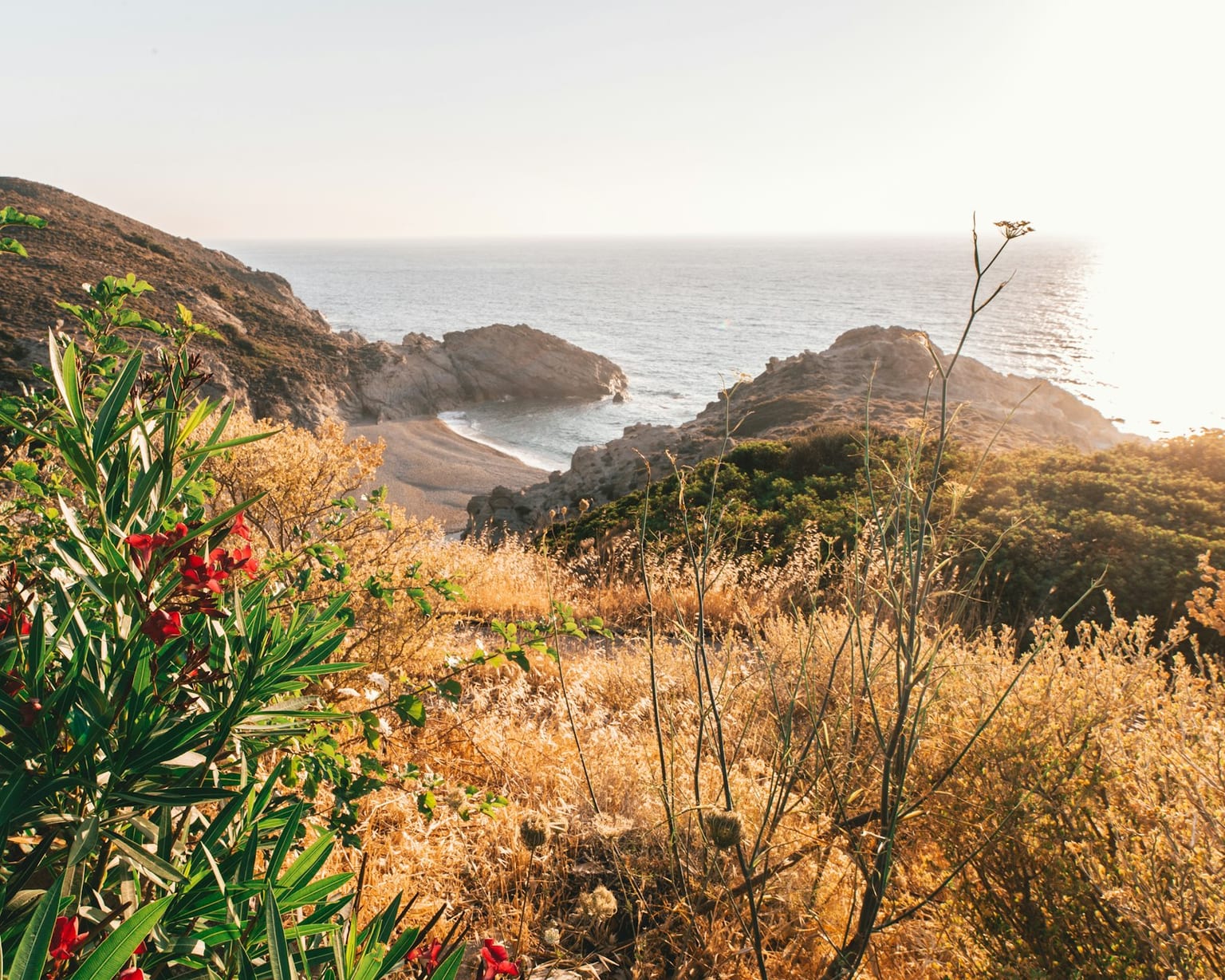
Livadi and Messakti, near Armenistis, are long sandy beaches with proper surf when the meltemi blows; lifeguards patrol in summer. Nas, 4 km west, is a small cove below the ruins of a temple of Artemis. On the south coast, Seychelles beach near Manganitis is a white-pebble cove reached by a 15-minute scramble.
Christos Raches
The mountain village above Armenistis where the day starts in the evening. Arrive at 10pm, sit in the square, and watch the shops open.
The hot springs
Therma, 3 km from Agios Kirykos, has a small bath house and a sea-side spring where hot water bubbles into a rock pool.
Hiking the Halari gorge
From Nas, follow the river inland through the gorge to a series of pools and small waterfalls, around 2 to 3 hours return in shade for most of the way.
Where to stay on Ikaria
- Armenistis: Best for first-timers: the main beaches, restaurants and the walk up to Raches all close by
- Christos Raches: Best for hikers and night owls who want the village life above the coast
- Agios Kirykos or Therma: Best for the airport, the hot springs and the quieter, drier south coast
- Evdilos: Best for ferry access and a proper harbor town base with cafes on the water
When to go
June and September are the calm months: sea around 22 to 24C, beaches quiet, hiking comfortable. July and August are the festival season and the busiest time, though Ikaria’s busy is still relaxed. The meltemi hits the north coast hard from mid-July, which makes Livadi and Messakti surf beaches and sends swimmers to the south side.
Spring is green and good for walking, but the sea is cold until late May and many rooms open only in June. It is not an off-season beach destination.
Getting there and around
Ikaria Island National Airport (JIK) sits on the eastern tip, about 12 km from Agios Kirykos, and takes only domestic flights: Olympic Air, Sky Express and occasionally Aegean from Athens (about 50 minutes) several times a week in summer, with some Thessaloniki services. Book early; the planes are small.
Ferries from Piraeus call at either Agios Kirykos on the south or Evdilos on the north; check which, because the two are an hour apart by road. Crossings run 6 to 9 hours, often overnight. Ikaria also connects to Samos, Fourni, Chios and Mykonos. From abroad, the easiest route is a direct flight to Samos (SMI) and the ferry across.
On the island, rent a car from the port or airport. Buses run once or twice a day at best. Allow twice the time the map suggests.
Ikaria vs the alternatives
Ikaria is the wilder, cheaper cousin of Samos, which has direct international flights, gentler beaches and more organized tourism but less of the untouched feel. Compared with Amorgos, which shares its hiking appeal and end-of-the-line remoteness, Ikaria is greener and more village-centered while Amorgos is more dramatic and Cycladic. Lesbos is a bigger, similarly authentic North Aegean choice with easier access. For walking-focused trips, see our guide to the best Greek island for hiking.
Booking Ikaria
The links below are affiliate links: we earn a commission if you book, at no extra cost to you. They change nothing about what this guide says. See how we make money.
- A car: Ikaria is mountainous, the roads are slow and the bus network is thin. A car is close to essential here. Localrent.
- Getting there: Ikaria (JKH) has limited flights; most people fly to Athens and take the ferry. Compare flights on Aviasales, then see our ferry guide.
Still not sure? Take the 2-minute Greek island quiz and get matched with the island that actually fits how you travel.
Also in the North Aegean
Not sure yet? Take the 2-minute quiz
Frequently asked questions
Is Ikaria expensive?
No. Ikaria is one of the cheapest Greek islands to stay on: simple rooms for 40 to 70 euros in high season, taverna meals for two around 30 to 45 euros with local wine, and festivals that cost the price of a plate of food.
How many days do you need in Ikaria?
At least five, given the ferry or flight, and a week is better. Its appeal is the rhythm rather than a checklist..
Does Ikaria have an airport?
Yes, Ikaria Island National Airport (JIK), near Agios Kirykos in the east. It handles only domestic flights, mainly from Athens with Olympic Air and Sky Express, a few times a week in summer.
Last updated 2026-09.