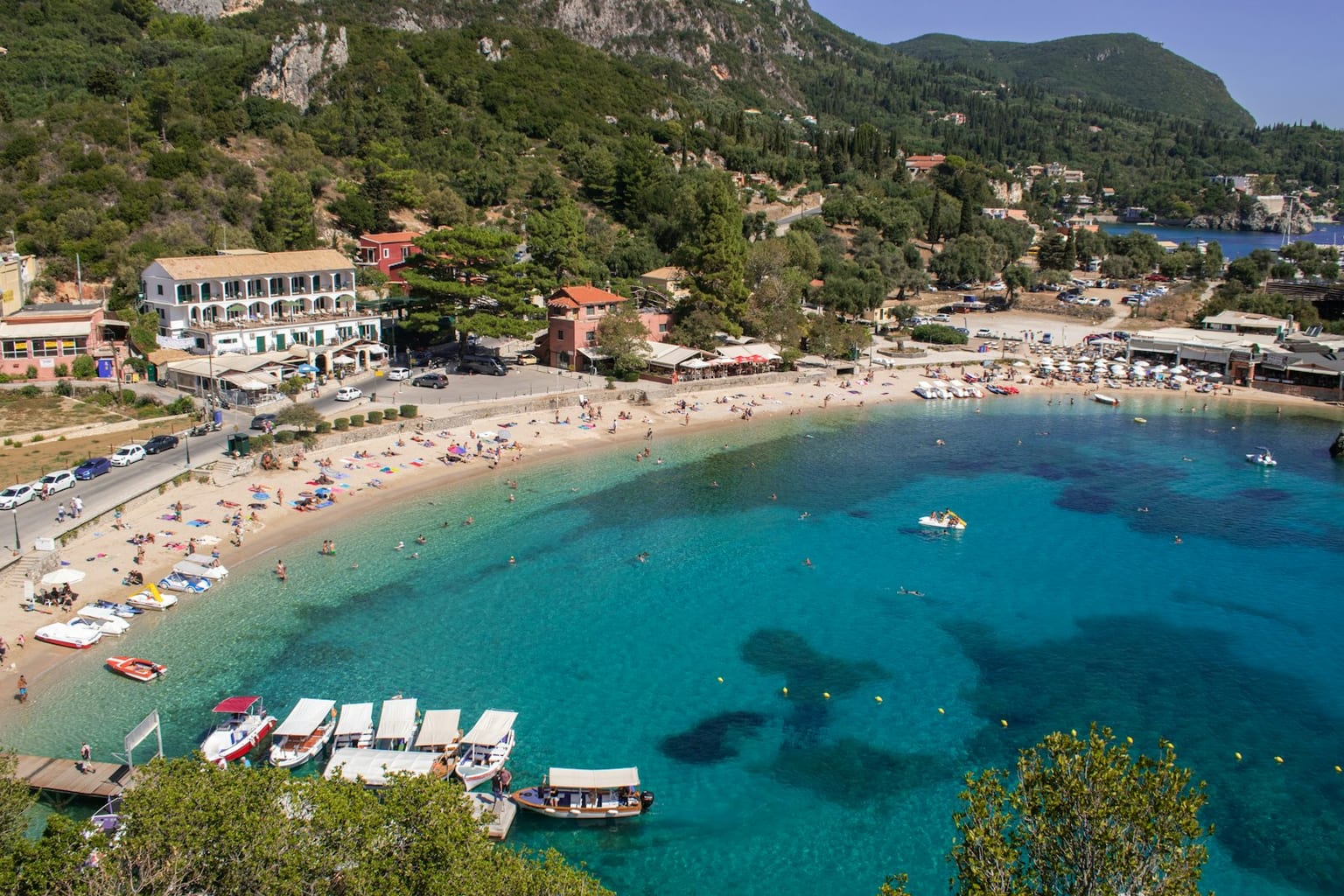
Island guide · the Ionian islands
Corfu Travel Guide: Is Corfu Right for You?
Corfu suits families, walkers and couples who want a green, Venetian island with calm water. Skip it for Cycladic scenery or nightlife. Honest Corfu guide.
Corfu at a glance
Go if: Families · Walkers · Couples wanting calm water and greenery · Durrells fans · Villa holidays
Skip it if: Cycladic scenery · Big nightlife (Kavos excepted) · Guaranteed dry weather in spring
Getting there: Corfu airport (CFU) is 3 km from Corfu Town; ferries from Igoumenitsa take about 1 hour 15 minutes to 1 hour 30 minutes, with no direct ferry from Piraeus.
Corfu is right for you if you want a green, hilly island with a Venetian town, calm turquoise coves on the northeast coast, easy family beaches and a softer, more Italian feel than the Aegean. It is the wrong island if you want the dry white-and-blue Cycladic look, a serious nightlife scene, or an island that has escaped mass tourism, because parts of the south and west are heavily developed.
Corfu at a glance
- Island group: Ionian Islands, off the northwest coast of Greece, opposite Albania
- Getting there: Corfu airport (CFU), 3 km from Corfu Town; ferries from Igoumenitsa on the mainland take about 1 hour 15 minutes to 1 hour 30 minutes and run almost hourly; no direct ferry from Piraeus. Ferries also arrive from Bari, Brindisi, Ancona and Venice in Italy
- Best for: Families, walkers, couples wanting calm water and greenery, Durrells fans, villa holidays
- Not for: Cycladic scenery, big nightlife (Kavos excepted), guaranteed dry weather in spring
- Best months: May, June, September, early October
- Price level: Mid
- Size & getting around: Medium-large (about 600 sq km, 60 km long). Corfu Town is walkable; buses serve the main resorts; a car is needed for the northeast coves and the west coast
Who Corfu is for
Corfu is for people who like their islands lush. Four centuries of Venetian rule left millions of olive trees, cypress-lined hills and a capital, Corfu Town, whose arcaded Liston and two fortresses look more like Naples than Mykonos. The northeast coast between Nissaki and Kassiopi, made famous by the Durrells, is a string of small pebble coves with clear, calm water that families and older swimmers love.
It is also a walking island. The Corfu Trail runs 220 km from Kavos in the south to the northern cape, and shorter stretches around Mount Pantokrator and the west coast cliffs above Paleokastritsa are genuinely good. Culturally it has more going on than most islands, from cricket on the Spianada to the most famous Easter celebrations in Greece.
Who should skip Corfu
If you are picturing whitewashed cubes against a dry brown hillside, Corfu will look wrong; it is greener and wetter than the Aegean, and the sea is Ionian rather than Aegean blue.
Skip it too if you want a party island, unless Kavos, a British bar-crawl resort at the southern tip, is your idea of one, or if you want to avoid package tourism altogether. Ipsos, Sidari and Benitses are built up and can feel tired. The good Corfu needs a car to reach.
What to actually do on Corfu
Corfu Town
Climb the Old Fortress, drink a coffee under the Liston arcades, and walk the Campiello lanes behind St Spyridon. It is the finest town in the Ionian and deserves a full day.
The northeast coves
Kalami, Agni, Kerasia and Avlaki are small pebble bays with tavernas on the water. Hire a small motorboat, no license required, and hop between coves you cannot reach by road.
Paleokastritsa and the west coast
Six bays, a headland monastery and sea caves make Paleokastritsa the most dramatic spot on the island.
Mount Pantokrator and Old Perithia
At 906 meters, Pantokrator is the highest point, with views to Albania and, on a clear day, Italy. Old Perithia below it is a half-abandoned Venetian village with a handful of tavernas.
Food and the Achilleion
Corfiot cooking is distinctly Venetian: pastitsada (beef or rooster in a spiced tomato sauce with pasta), sofrito and bourdeto. Pair a long lunch with a morning at the Achilleion palace, 10 km south of town.
Where to stay on Corfu
- Corfu Town: History, restaurants, evening life and the airport ten minutes away; couples and culture-first trips
- Northeast coast (Kalami to Kassiopi): Villas, calm coves, boat hire; families and couples who want peace
- Paleokastritsa and Liapades: Dramatic west-coast scenery, good for exploring the north; walkers and photographers
- Agios Gordios or Glyfada: Long sandy west-coast beaches with sunsets; beach-first travelers and younger groups
When to go
May and June are the best months: the island is at its greenest, wildflowers are out, the sea reaches 21 to 23 C by June, and prices are moderate. September is warm with sea temperatures around 24 to 25 C and early October is still pleasant, though showers become more likely.
July and August are hot and humid, with the resorts at capacity and the northeast coves busy with boats. Corfu is outside the meltemi zone, so summer afternoons are calmer than in the Aegean, which is why the water stays so flat. Winter is mild but wet, and most resorts close from November to April.
Getting there and around
Corfu airport (CFU) has direct summer flights from the UK, Ireland, Germany, Italy, France, the Netherlands, Belgium, Austria, Switzerland, Poland and the Nordic countries, plus year-round flights from Athens taking about an hour. Ferries from Igoumenitsa take around 75 to 90 minutes; there is no direct ferry from Piraeus. Overnight ferries from Italy suit anyone driving down from Europe.
On the island, green KTEL buses link Corfu Town with the main resorts and the blue town buses cover the suburbs, but a car is essential for the northeast coves, the west coast and the villages. Roads are narrow and winding; allow an hour from town to Kassiopi.
Corfu vs the alternatives
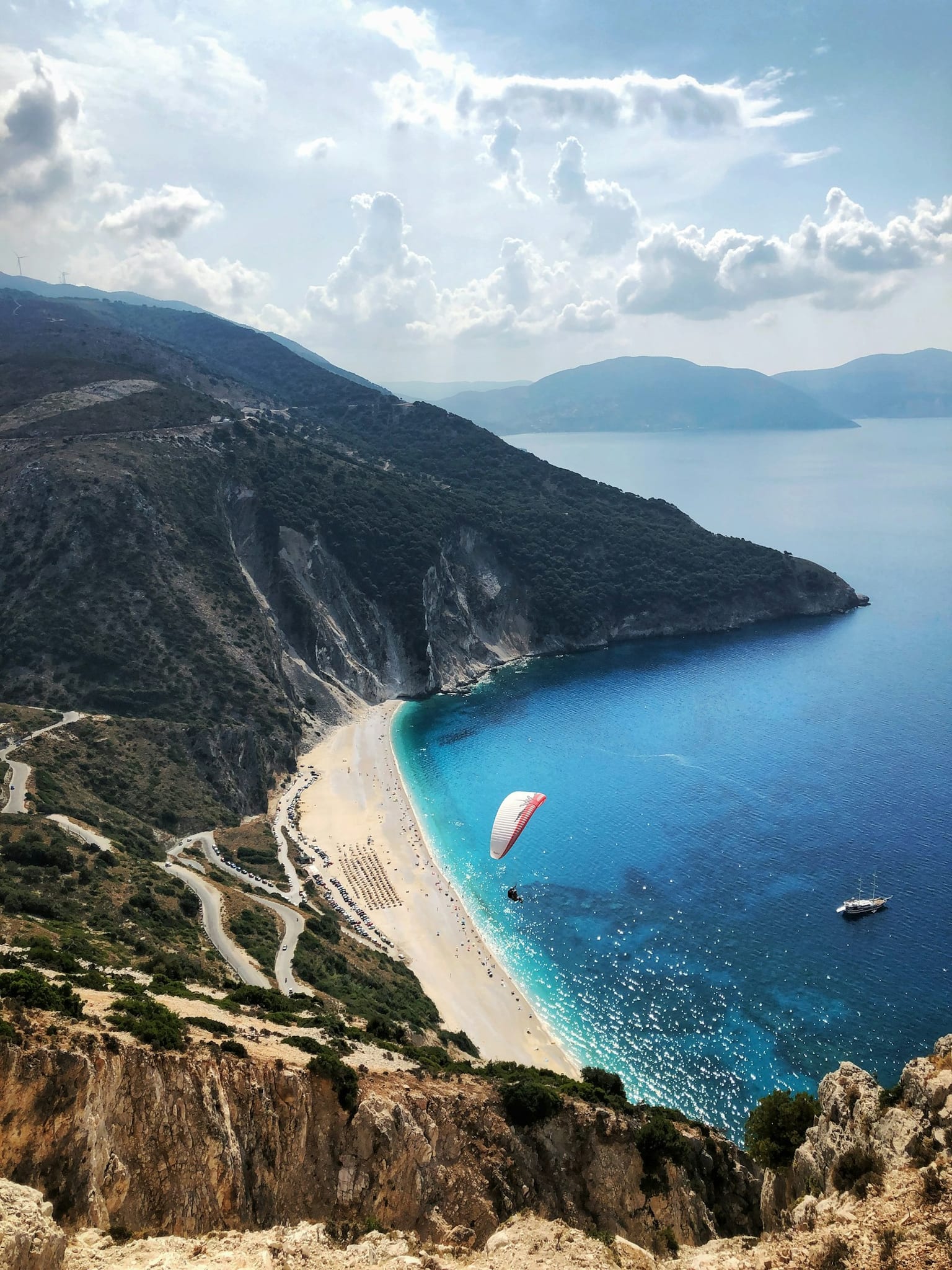
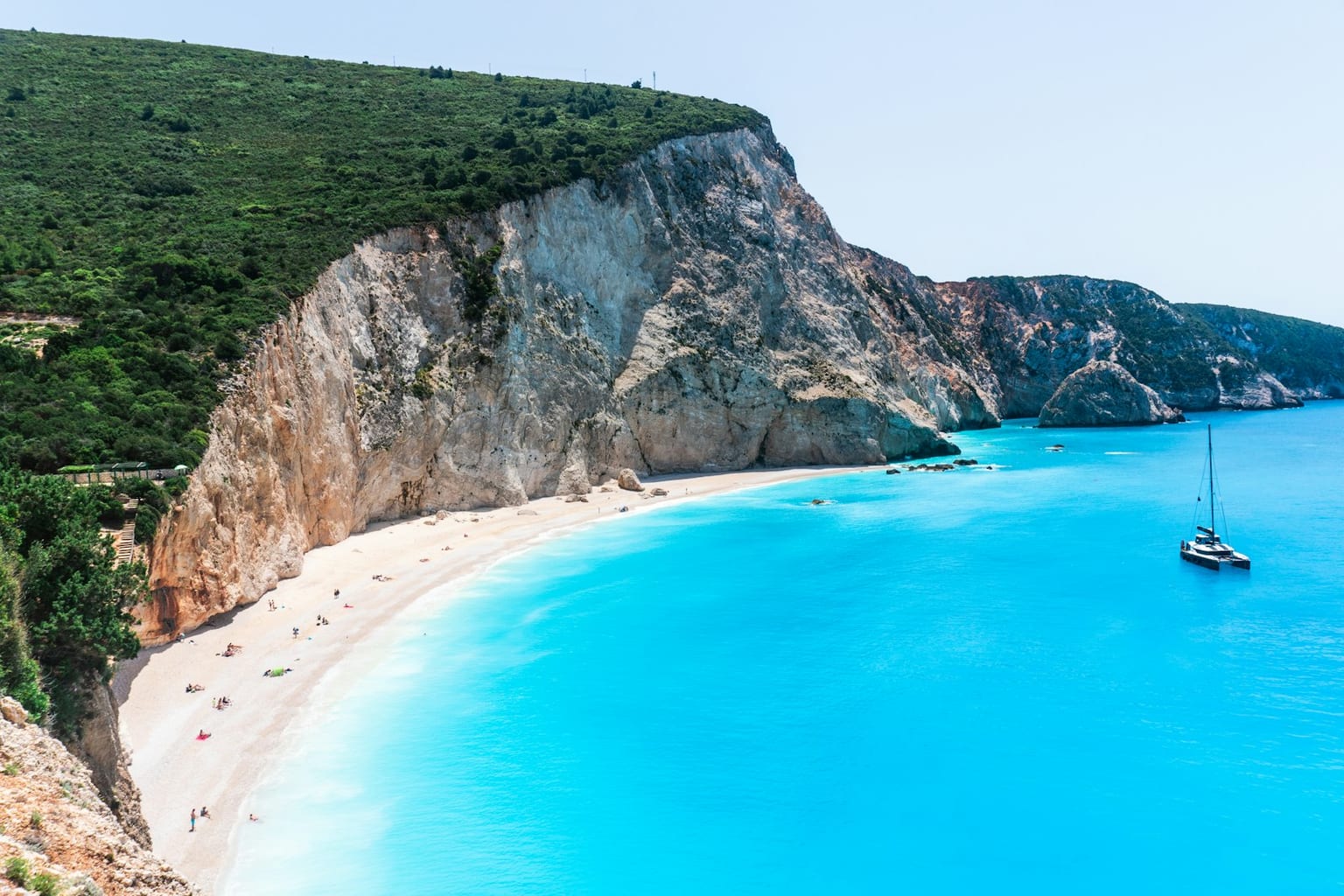
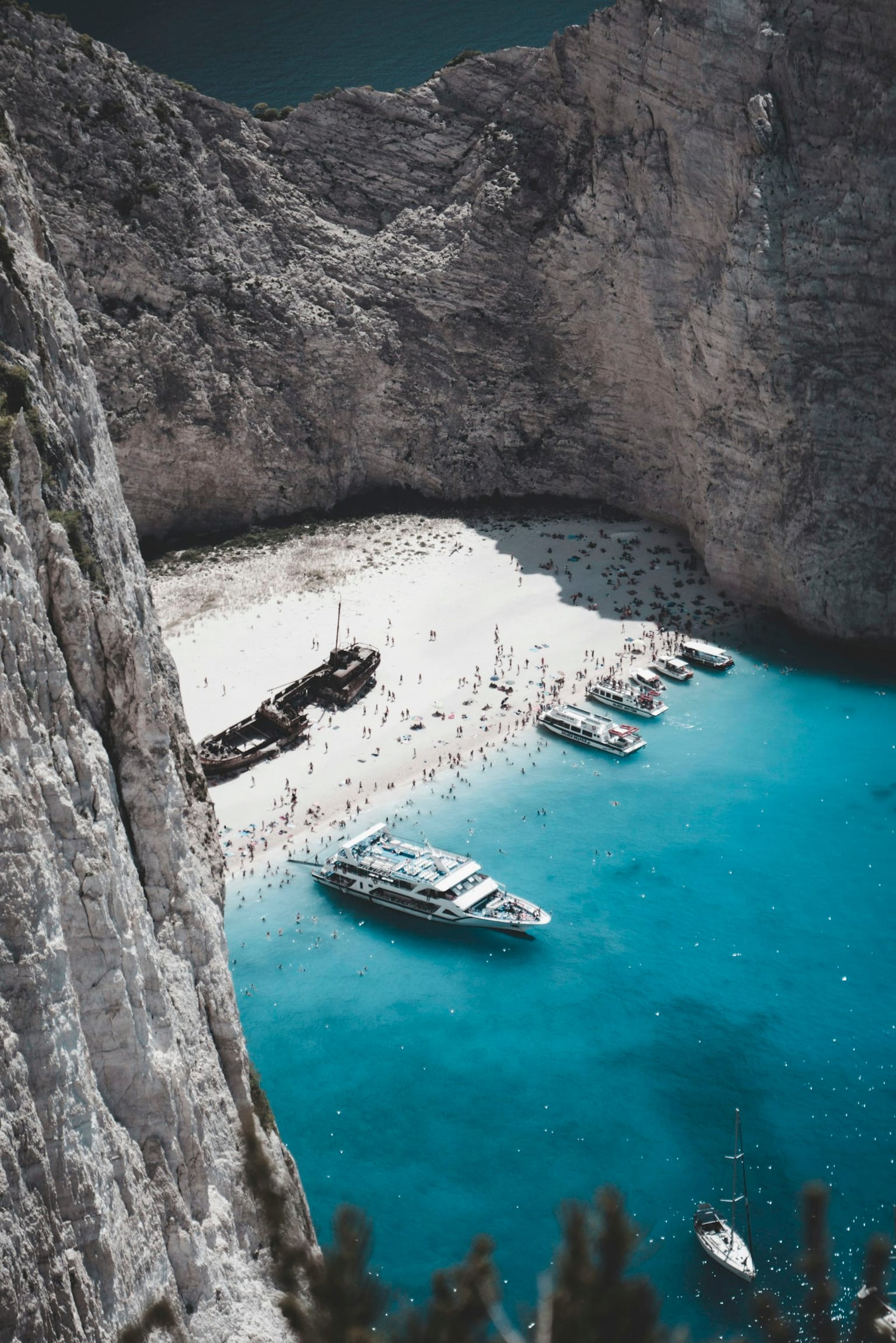
Kefalonia has bigger mountains, fewer resorts and the Ionian’s most famous beach at Myrtos, while Lefkada is connected to the mainland by road and has the most dramatic west-coast beaches in Greece. Zakynthos is smaller with a bigger party scene and Navagio beach. For a wider view see our guide to the best Greek island for families.
Booking Corfu
The links below are affiliate links: we earn a commission if you book, at no extra cost to you. They change nothing about what this guide says. See how we make money.
- Flights: Corfu (CFU) takes direct flights from across northern Europe all summer. Compare fares on Aviasales.
- A car: The north-west coves and the Corfu Trail are hard to reach otherwise, and the island is bigger than it looks. Localrent.
- The Achilleion: Corfu’s one unmissable interior, and it gets coach groups. Tickets on Tiqets.
Still not sure? Take the 2-minute Greek island quiz and we will match you with the island that actually fits how you like to travel, whether that turns out to be Corfu or somewhere you had not considered.
Also in the Ionian islands
Not sure yet? Take the 2-minute quiz
Frequently asked questions
Is Corfu expensive?
Not especially. It is mid-priced by Greek standards: cheaper than Mykonos or Santorini, similar to Rhodes or Crete. Northeast villas command a premium in August, but tavernas remain reasonable.
How many days do you need in Corfu?
Five to seven days is right for most trips: one or two for Corfu Town, two for the northeast coves, one for Paleokastritsa and the west coast, and a day for Pantokrator and the villages.
Does Corfu have an airport?
Yes. Corfu Ioannis Kapodistrias airport (CFU) sits just 3 km south of Corfu Town on the edge of the Halikiopoulou lagoon, with direct flights from across Europe from April to October and daily Athens services year-round.
Last updated 2026-09.