Best of
Best Greek Island for First-Time Visitors
The best Greek island for first time visitors, ranked honestly: Paros, Santorini, Naxos, Crete, Corfu and Rhodes, with the catch and where to stay on each.
If you have never been to Greece and want one island that gets everything right the first time, go to Paros. It has an airport, the best ferry connections in the Cyclades, a beach for every mood and two of the prettiest towns in the Aegean, without the prices or crowds of its famous neighbors. The runner-up is Santorini, which is the island most first-timers actually want, and which delivers the postcard as long as you know what you are signing up for.
Quick answer
- Paros — the whole Cycladic package (beaches, towns, nightlife, ferries) at a sane price.
- Santorini — the view everyone came for; best for two or three nights, not a week.
- Naxos — the best beaches in the Cyclades, cheaper than Paros, easy from Athens.
- Crete — an island the size of a small country; best if you want variety and a rental car.
- Corfu — green, Venetian and served by cheap direct flights from most of Europe.
- Rhodes — a walled medieval city plus reliable sun from April to November.
Paros
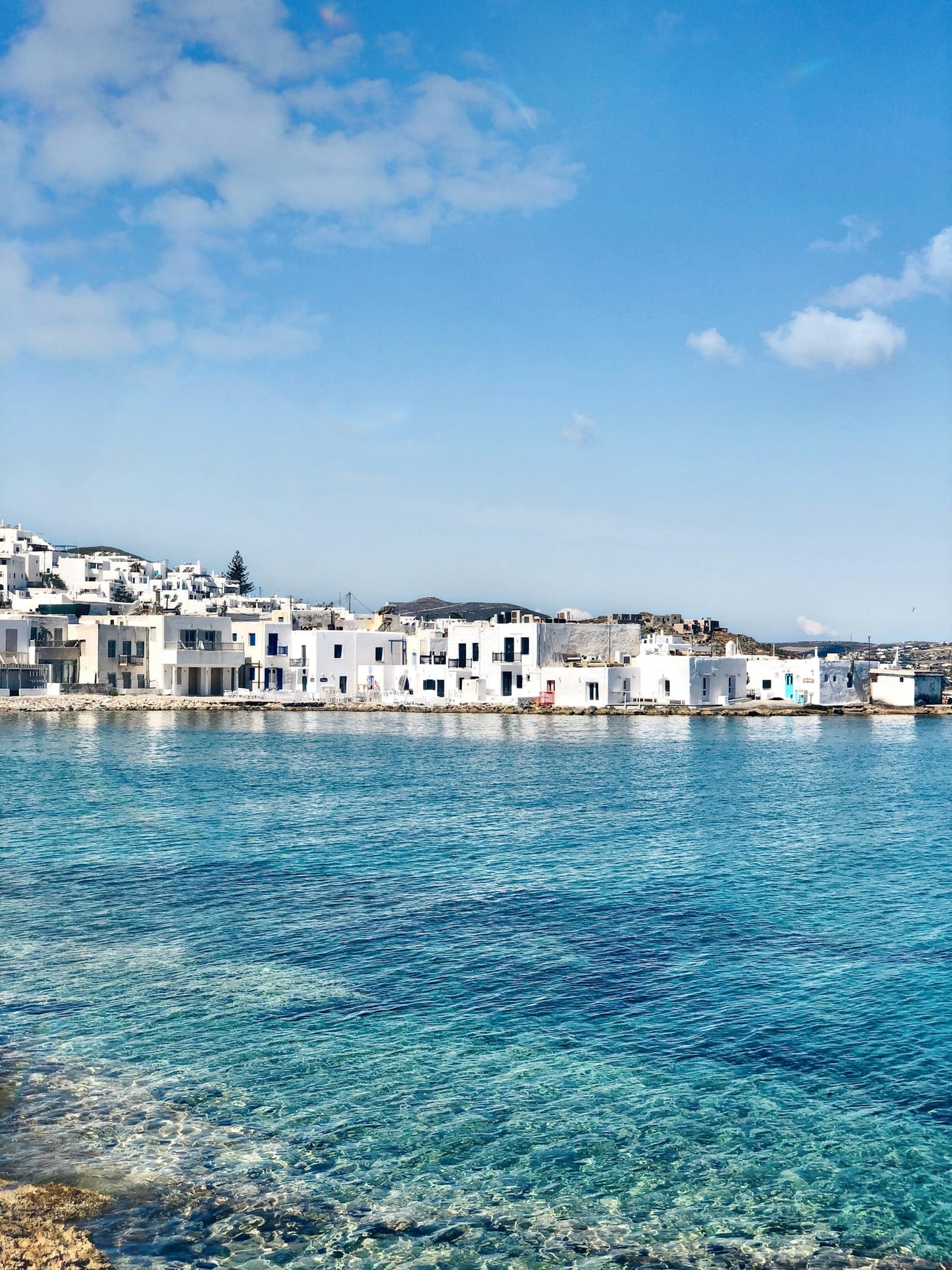
Paros is the island that does everything well. Parikia, the port town, has a proper Cycladic old quarter behind the harbor, and Naoussa, twenty minutes north, is a fishing village turned cocktail-bar town that still looks like a fishing village at eight in the morning. Beaches run the full range, from the wide sand of Golden Beach on the east coast to the sheltered granite coves at Kolymbithres, and the ferries from Piraeus put Naxos, Santorini and Mykonos each within a short hop if you want to add a second island.
The catch is that Paros has been discovered. Naoussa in August is busy and not cheap, and the meltemi wind blows hard on the north coast in July and August. Base yourself in Naoussa if you want evenings out, Parikia if you want ferry convenience and slightly lower prices, or Aliki on the south coast for a quieter family stay. The airport has several daily flights from Athens, and the ferry from Piraeus takes about three hours on a fast boat and four on a conventional one.
Santorini
Nobody needs convincing on Santorini. The caldera is as good as the photos, the volcanic wine is genuinely interesting, and the international airport has direct flights from across Europe, which makes it the easiest Cycladic island to reach without going through Athens.
The catch is that it is a view, not a beach island. The black-sand beaches at Perissa and Kamari are fine but not what you crossed a continent for, cruise-ship crowds pack Fira and Oia from late morning to sunset, and a caldera-view room costs two or three times what the same room costs on Naxos. Give it two or three nights and pair it with somewhere else. Stay in Imerovigli or Firostefani for the view without Oia’s bottleneck, or in Pyrgos inland if you would rather spend on dinners than on a room.
Naxos
Naxos is what Paros was fifteen years ago. It is the largest and greenest of the Cyclades, grows its own potatoes, cheese and citrus, and has a continuous run of sandy beaches south of Chora, from Agios Prokopios through Agia Anna to Plaka, that beats anything on Paros or Mykonos. Chora itself has a Venetian castle quarter and the Portara, the marble temple doorway on the islet by the port, which is the best free sunset in the Aegean.
The catch is subtle: Naxos is low-key, so if you want a scene you will notice its absence. The small airport takes only propeller flights from Athens, so most people arrive by ferry, three and a half to five hours from Piraeus. Base yourself in Chora for walkability and the bus to the beaches, or at Agios Prokopios or Plaka if you want to wake up on the sand. Rent a car for a day to see Halki and Apeiranthos.
Crete
Crete is the answer if a week on a small island sounds claustrophobic. It has two international airports, Heraklion and Chania, a coastline that runs from the pink sand of Elafonisi in the southwest to the palm forest at Vai in the far east, the Minoan palace at Knossos, the Samaria Gorge, and a food culture the rest of Greece openly envies.
The catch is scale. Crete is about 260 kilometers long, and you will not see it from one base. A first-timer should pick the west, sleep in or near Chania old town, rent a car, and treat Elafonisi, Balos and the gorge as day trips. The east around Agios Nikolaos is the other sensible choice; do not try both in one week.
Corfu
Corfu is the easiest island to reach from northern Europe, with direct flights from dozens of British, German and Scandinavian airports from April to October, and it looks nothing like the whitewashed Cyclades: it is green, Venetian and covered in cypress and olive groves. Corfu Town is a UNESCO World Heritage site with arcaded streets and two fortresses, and the northeast coast around Kalami and Agni has pebble coves with water that feels almost Italian.
The catch is that the resort strips at Kavos and Sidari are exactly what you fear when you hear the words package holiday, and the east-coast beaches are pebbly rather than sandy. Stay in Corfu Town or on the northeast coast, skip the far south, and rent a car; the roads are narrow but the distances are short.
Rhodes
Rhodes gives you a walled medieval city built by the Knights of St. John, some of the most reliable sunshine in Greece, and a season that stretches from Easter to early November. Lindos, with its acropolis above a horseshoe bay, is the second highlight, and the east coast is lined with sandy beaches. Direct flights from most of Europe land here, and the island is big enough that prices stay competitive.
The catch is the resort belt around Faliraki and Ixia, which is loud and not especially Greek. Base yourself inside or just outside the Old Town walls, or in Lindos if you want beach first. A car is useful but not essential; buses along the east coast run often.
How we chose
We weighted four things: ease of arrival (an airport or a ferry under four hours), a real choice of beaches and towns, prices that do not punish a first visit, and enough to do that a week does not drag. We deliberately favored islands that pair easily with a second one, because most first-timers end up wanting to see two. Every island here has its own page in all 25 island guides.
Islands to avoid for a first visit
Mykonos is spectacular, but it is expensive, windy and built around a nightlife scene that either is or is not your thing; know which before you book. Ikaria, Amorgos and Folegandros are wonderful and slow, and slow is the point, which is hard to appreciate until you have done a busier island first. Lesbos and Samos are large, interesting and far from the Athens-to-Cyclades circuit, better saved for a second or third trip. Hydra is a perfect one or two nights from Athens, not a week.
If you are still torn, the island quiz takes two minutes and matches you to an island based on how you actually like to travel, not how the brochures assume you do.
Frequently asked questions
Is Santorini or Mykonos better for a first visit?
Santorini, unless nightlife is the main reason you are going. Both are expensive, but Santorini gives you the caldera, the wineries and the archaeological site at Akrotiri, while Mykonos gives you beach clubs and a beautiful town. Most first-timers get more out of Santorini for two nights and then move on to Paros or Naxos.
How many islands should I visit on a first trip?
Two in a week, three in ten days, no more. The classic first-timer route is Athens to Santorini to Paros or Naxos and back, with the flight home from Athens.
Do I need to fly through Athens?
Not necessarily. Santorini, Mykonos, Crete, Rhodes, Corfu, Kos and Zakynthos all have direct seasonal flights from most of Europe. Paros and Naxos do not, so you either fly to Athens and connect, or fly into Santorini or Mykonos and take a ferry, which is often the more pleasant option.
Last updated 2026-09.